EXPLAINERHeat & Health
Living with heat: how Mediterranean communities adapt to heatwaves
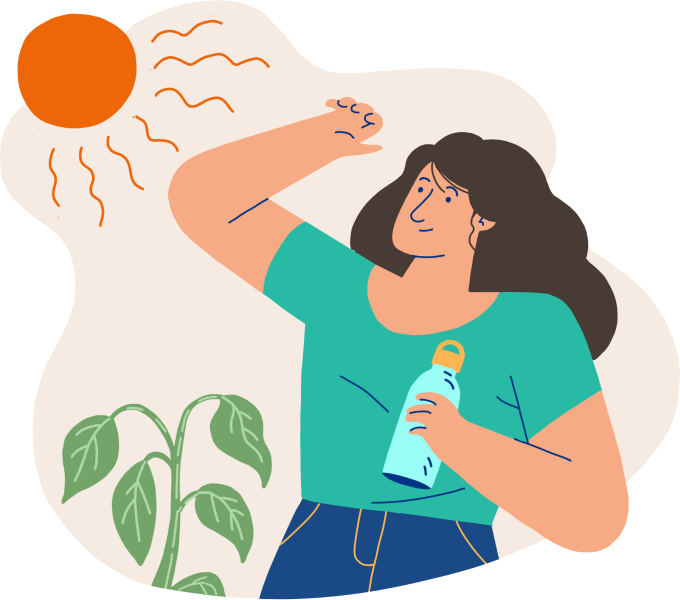

When a heatwave sets in, life changes abruptly. We stop moving through the day in the same way. Ordinary activities — going to work, meeting friends, letting children play outside — become difficult or impossible for much of the day. Streets empty out, homes are sealed against the heat, and many people spend long hours confined to the few spaces where cooling is possible. Across the Mediterranean, heatwaves no longer feel like extreme weather events; they temporarily reshape how people live.
Heatwaves are no longer exceptional. In simple terms, a heatwave is several days in a row when temperatures are much hotter than what a place is used to. What has changed is not the weather pattern itself, but the heat it now carries. As the climate warms overall, these hot spells push temperatures further, last longer, and offer less relief — especially at night.

Across the Mediterranean, heatwaves no longer feel like extreme weather events; they temporarily reshape how people live.
Climate change is the reason. The same high-pressure systems that caused heatwaves decades ago still form over the Mediterranean. But in a warmer world, they now trap more heat near the ground, allowing it to build up and linger. In the Eastern Mediterranean, scientists have found that the intensity of heat during heatwaves is now, on average, about seven times higher than it was in the mid-20th century. Today’s heatwaves simply hit harder.
Heat becomes even more dangerous when combined with humidity — a reality in many coastal cities such as Beirut, Casablanca, Alexandria, or Tunis. When the air is saturated with water, the body struggles to cool itself. Heat feels heavier, exhaustion sets in faster, and health risks increase, even when temperatures are similar to those inland.
In the Eastern Mediterranean, scientists have found that the intensity of heat during heatwaves is now, on average, about seven times higher than it was in the mid-20th century.
Cities intensify these effects. Many Mediterranean cities are dominated by cement, asphalt, and steel, materials that absorb heat during the day and slowly release it at night. As a result, urban neighborhoods often remain hot long after sunset, offering little relief. At the same time, fewer trees, gardens, and permeable surfaces mean less shade and less natural cooling, making it harder for heat to escape.
Drying soils add another layer of pressure. As landscapes dry out, the land loses its ability to cool the air naturally. Instead of moisture helping lower temperatures, heat builds up near the ground and stays there. This is one reason heatwaves now tend to stretch over many days, or even weeks, rather than passing quickly.
The health impacts are often underestimated. A 2021 study estimated that one in three heat-related deaths since 1991 can be linked to climate change. Yet heat is rarely listed as a direct cause of death. Instead, it worsens existing conditions — heart disease, lung disease, dehydration — quietly pushing bodies beyond their limits. Older adults, pregnant women, young children, and people with chronic illnesses are among the most vulnerable.
The Mediterranean, however, is not unfamiliar with heat. Across the region, communities have long adapted their lives to hot summers.
Daily rhythms traditionally followed the sun: early mornings, slower midday hours, and social life returning in the evening. Buildings were designed to keep heat out, with thick walls, small openings, shutters, courtyards, and airflow that cooled without large glass surfaces. Shade was shared through trees, narrow streets, fabric awnings, and cafés that offered relief from the sun.
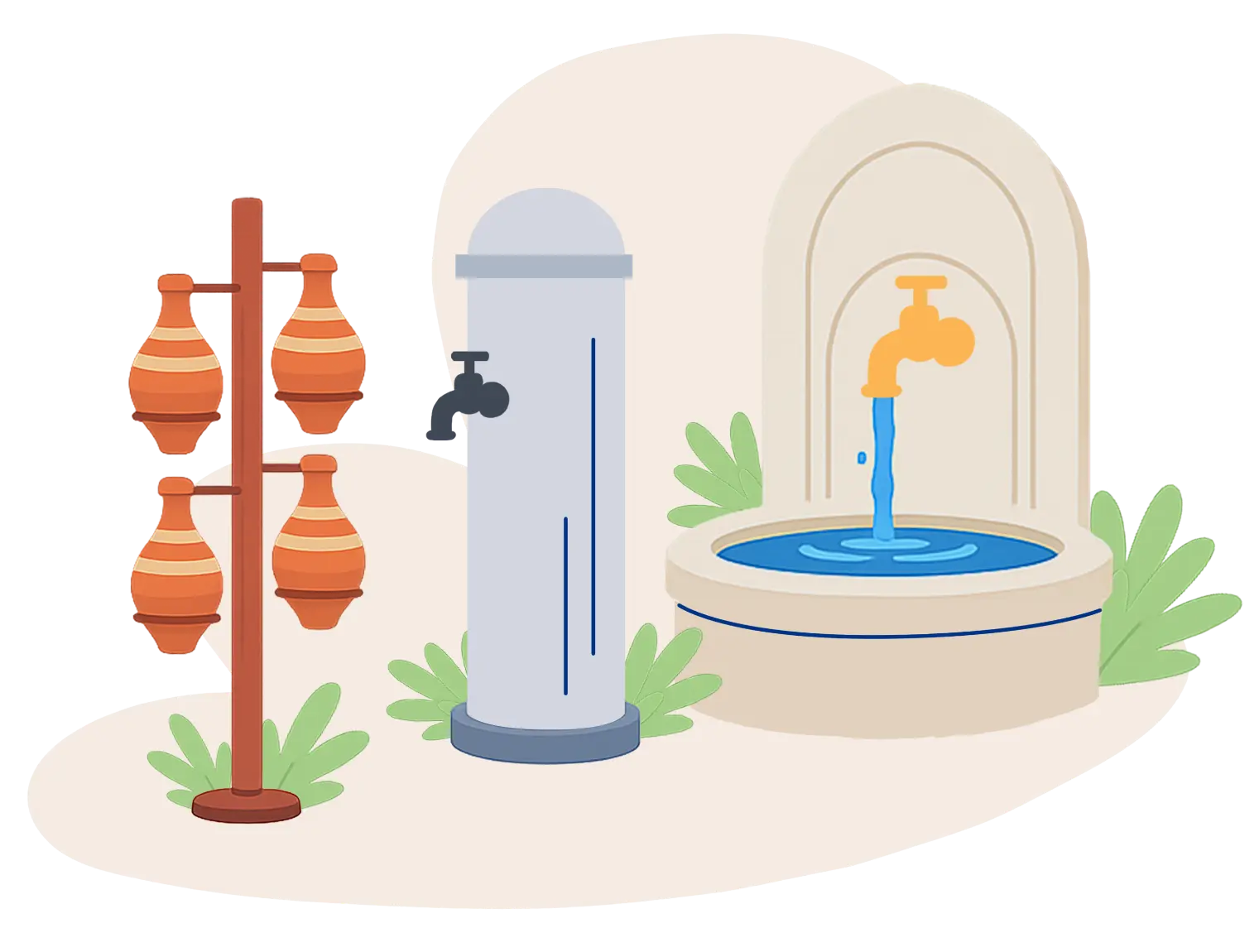
Water, too, has long been treated as a shared resource. In many Mediterranean and Arab cities, free drinking water is available in public spaces—through fountains, metal dispensers, or clay jars that keep it cool. These practices are rooted in care and dignity. During heatwaves, access to water can be lifesaving.
Clothing followed the same logic. Loose, breathable fabrics, light colors, and garments that cover the skin helped protect people from direct sun while allowing air to circulate. What has changed is not the wisdom of these practices, but the intensity of the heat they must now withstand.
As temperatures rise, the challenge is not whether Mediterranean societies can adapt — they always have. It is whether care, knowledge, and protection can reach everyone, so that living with heat does not mean living in isolation, risk, or silence.
Today, adapting to heatwaves means reinforcing these traditions while adding new layers of protection. Air conditioning saves lives, especially during extreme heat and for vulnerable people. At the same time, it is not affordable for everyone, and widespread reliance on air conditioning increases energy demand and greenhouse gas emissions, reinforcing the warming that makes heatwaves more severe.
Reducing risk, therefore, means combining cooling technologies with other, complementary solutions. Simple actions still make a difference: closing sun-facing shutters during the day, opening windows only on shaded sides, cooling the body directly with water, staying hydrated, and avoiding outdoor activity during peak heat hours. Plants on balconies and rooftops help lower indoor temperatures and reduce the heat stored by buildings. Shaded public spaces allow people to reconnect once the heat eases.
Most importantly, heat adaptation remains a collective effort. Checking on older neighbors, offering water, sharing shade, and noticing when someone is struggling are as vital today as they were in the past.
Heatwaves are not just a weather issue. They quietly reshape daily life — how we move through our cities, how we organize time, how we care for one another. Across the Mediterranean, many tools for living with heat already exist, embedded in everyday habits, buildings, and social ties.
As temperatures rise, the challenge is not whether Mediterranean societies can adapt — they always have. It is whether care, knowledge, and protection can reach everyone, so that living with heat does not mean living in isolation, risk, or silence.
Is your climate changing?
Take this quick quiz and see how climate change is unfolding where you live.