EXPLAINERClimate Change Impacts on the Mediterranean
What is Climate Change – and What Does it Mean for the Mediterranean?
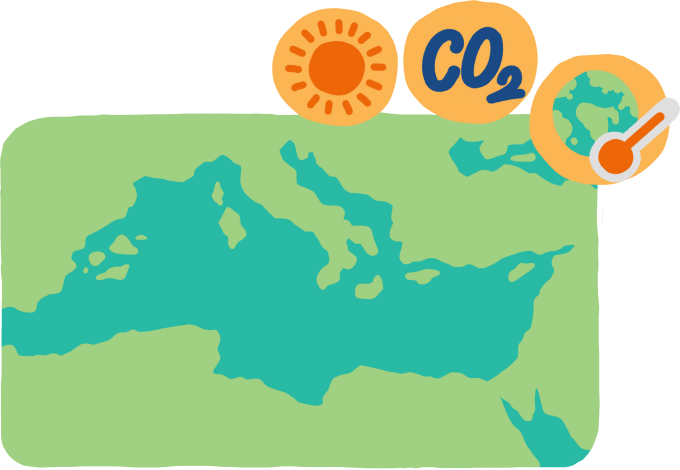

Climate change is not a single heatwave, an unusually rainy week, or a mild winter. That’s the weather – something that shifts from day to day, sometimes from one hour to the next. Climate, by contrast, is the long-term pattern of temperature, rainfall, and wind that shapes how people live, farm, and use water.
Scientists study these patterns over decades — usually 30 years or more — to understand what is considered normal, and to detect when those rhythms begin to change. Today, those shifts are clear across the world. The Mediterranean is no exception.
At the heart of climate change are greenhouse gases. In the right amounts, they are essential. Gases such as carbon dioxide, methane, and nitrous oxide form a natural blanket around Earth, trapping just enough heat to make life possible. Without them, our planet would be too cold to inhabit.

Greenhouse gases released in excess since the Industrial Revolution are causing climate change.
The problem is not their existence, but their excess. Since the Industrial Revolution, human activities have released far more greenhouse gases than nature can absorb.
Carbon dioxide is mainly produced by burning coal, oil, and gas for electricity, transportation, and industry. Methane comes from oil and gas systems, livestock, and waste. Nitrous oxide is released through fertilizers used in intensive farming. Some industrial gases are present in smaller amounts but trap much more heat.
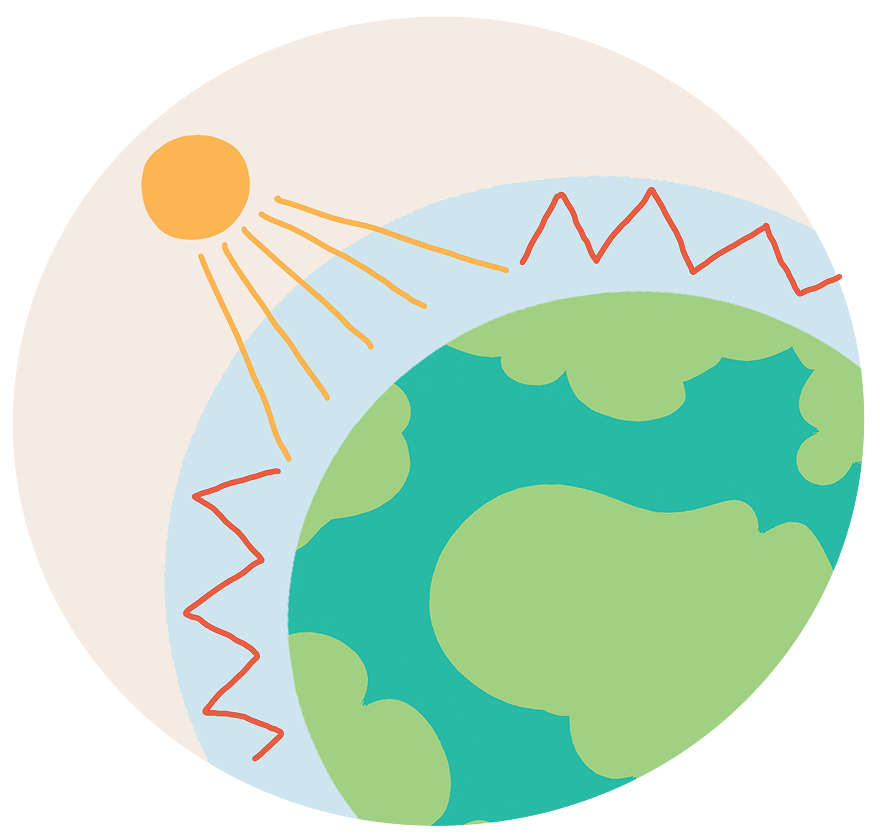
Together, these gases thicken the Earth’s heat-trapping blanket. Sunlight still reaches the planet, but more of the heat is held in the atmosphere instead of escaping into space. Oceans absorb much of this excess energy. Ice melts faster. Winds and currents that shape weather patterns begin to shift.
The effects are already visible. Nineteen of the twenty warmest years on record have occurred since 2000. Glaciers are retreating. Seas are rising. Rainfall is becoming less predictable.
The Mediterranean is warming faster than most regions of the world — and even small temperature increases have big consequences.
Globally, average temperatures have risen by about 1.1°C since pre-industrial times. In the Mediterranean, warming is faster — between 1.5 and 1.8°C. This difference may seem small, but it has big consequences. Each 0.1-degree rise in temperature increases the risk of droughts, wildfires, floods, and extreme heat.
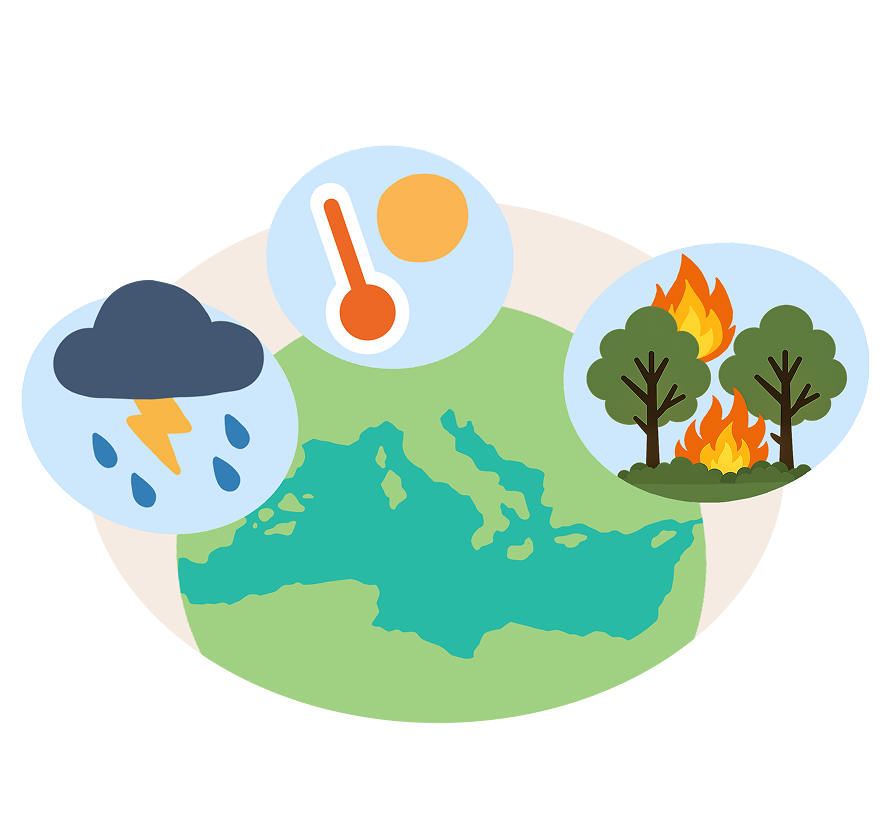
The Mediterranean is now considered a climate hotspot. Summers are longer and hotter. Rainfall is less frequent, but when it does occur, it tends to fall in intense bursts that cause flooding and soil erosion. Droughts can last for months or even years.
Along the coast, rising sea levels push saltwater into freshwater aquifers and farmland. Inland, groundwater — once a safety net during dry years — is being extracted faster than it can recharge. Farmers, pastoralists, and fishers often experience these pressures first, but their effects extend to everyone through rising food prices, water shortages, and growing uncertainty.
At the household level, these changes are not felt equally. Climate change tends to affect women more than men, as rising temperatures and water scarcity increase the burden of managing family health, sanitation, and food preparation — roles that are still largely carried by women across the region.
Climate change is not only about the weather. It is reshaping the ecosystems that support food, water, and life itself.
Nature is under strain as well. Wetlands that filter water and reduce floods are shrinking. Forests that store carbon and protect soils are more often set ablaze. In the sea, warmer and more acidic waters are reducing fish stocks and marine biodiversity, threatening coastal livelihoods.
Climate change is not only about the weather. It is reshaping the ecosystems that support food, water, and life itself.
Yet the Mediterranean is also a region with a long history of resilience. Communities here have faced droughts, floods, conflicts, scarcity, and change for centuries. They adapted by sharing knowledge, carefully managing scarce resources, and supporting one another.
That capacity still exists. Climate change is accelerating, but people are not powerless. By reducing greenhouse gas emissions, restoring ecosystems, using water more efficiently, and investing in collective solutions, Mediterranean societies can protect what matters most—livelihoods, health, culture, and community.
The challenge is serious. But so is our ability to respond, together.
Is your climate changing?
Take this quick quiz and see how climate change is unfolding where you live.