EXPLAINERPlastic & Waste
Plastic Isn't Just Pollution : It's a Climate Problem
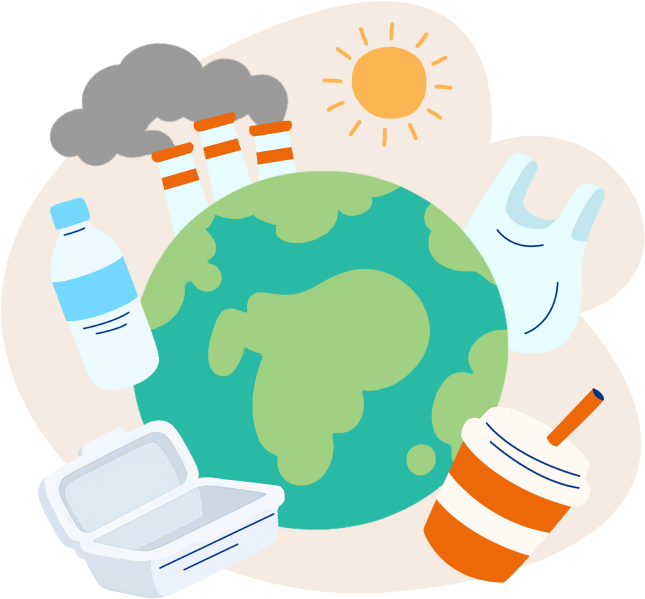

Have you ever tried to avoid using plastic for just one day?
In many Mediterranean cities — and in much of the world — it increasingly feels impossible. You buy a kilo of tomatoes at the market, and they are automatically placed in a plastic bag. You order a juice, and it arrives with a straw already inside. You pick up a simple sandwich, and it is wrapped in layers of packaging.
Often, these gestures are meant as a sign of care — a way for shopkeepers to protect the product or make life easier for customers. But by the end of the day, they add up to a surprising pile of plastic.
Not all plastics are created equal. Some plastic products are durable and designed to be used for years. Others play essential roles in sectors like medicine, construction, and renewable energy technologies. The bigger problem lies with plastics manufactured to be used once — sometimes for only a few minutes — before being thrown away for final disposal.
These are known as single-use plastics, often shortened to SUPs.
The Big 5 SUPs in the Mediterranean
-
1

Single-use plastic bags
-
2

Plastic water bottles
-
3

Takeaway cups
-
4

Plastic straws
-
5

Takeaway Food containers
Across the Mediterranean, a handful of single-use plastic items appear again and again: plastic shopping bags, drink bottles, food and beverage containers, straws and stirrers, and takeaway packaging. Cheap to produce and easy to distribute, they have become standard in everything from neighbourhood cafés to large supermarkets. And while they may be used for just a few minutes, they can remain in the environment for hundreds of years.
But plastic is not only a pollution problem — it also fuels climate change.

While they may be used for just a few minutes, plastics can remain in the environment for hundreds of years.
Plastic Starts With Fossil Fuels
Most plastics are made from fossil fuels. Oil and natural gas are extracted from the ground, transported to refineries, and transformed through energy-intensive chemical processes into small plastic pellets. These pellets are then melted and molded into bottles, packaging films, containers, and other everyday products. Each stage of this process releases greenhouse gases. In fact, around 90% of the climate impact of plastics occurs during production, from fossil fuel extraction to manufacturing.
Around 90% of the climate impact of plastics occurs during production, from fossil fuel extraction to manufacturing.
Today, plastics are among the fastest-growing uses of fossil fuels. Globally, around 14% of oil and 8% of natural gas are used to produce plastics and petrochemicals. As a result, the production, use, and disposal of plastics account for roughly 5% of global greenhouse gas emissions — about twice the emissions of the aviation sector.
This means that every plastic item carries a hidden climate footprint before it is even used. Unfortunately, this footprint is growing quickly. More than half of all plastics ever produced have been manufactured since the year 2000, and we are set to double our current global annual production by 2050 as global demand for packaging and disposable products continues to rise.
From Waste to the Sea
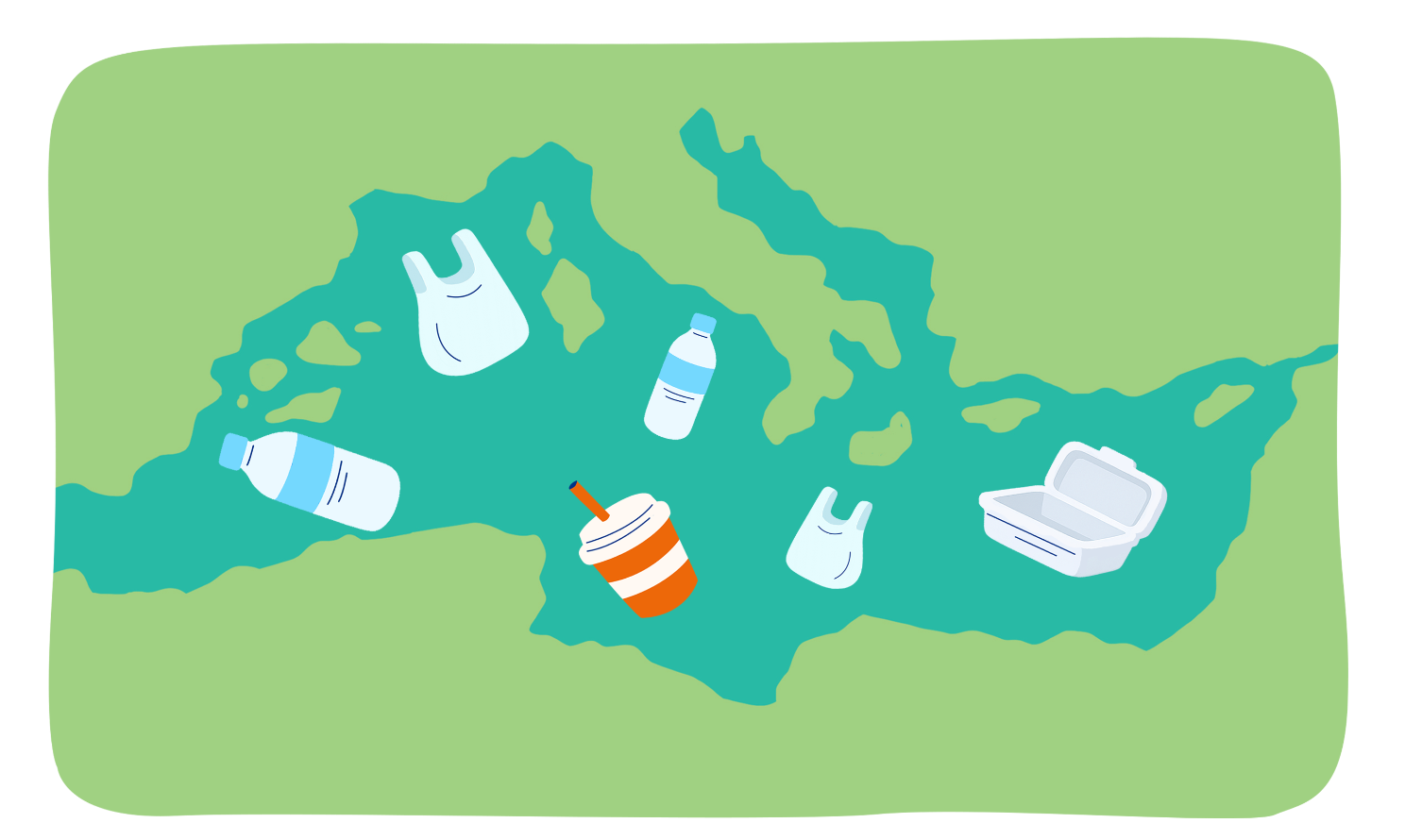
Once plastic is discarded, the story becomes harder to control. Ideally, waste would be collected and recycled into new materials. In reality, only about 9% of plastic waste worldwide is recycled. The rest is landfilled, incinerated, or released into the environment.
The Mediterranean Sea is widely recognised as one of the regions most affected by plastic pollution, with microplastic levels comparable to those found in the world’s largest ocean “garbage patches,” where floating plastic gathers in huge swirling currents.
In the semi-closed Mediterranean basin, 80 to 90% of the marine litter found lying on the shores, floating throughout the water column or deposited on the seafloor is made of plastic. And much of it consists of lightweight, single-use plastic items such as shopping bags, drink bottles, cups, food and beverage containers, and straws.
Each day, an estimated 730 tonnes of plastic waste enter the Mediterranean, carried by rivers, wind, and poorly managed waste systems.
Within this system, single-use plastics play an outsized role. Because they are designed to be disposable, they must be replaced constantly. This keeps plastic production — and the fossil fuels behind it — growing.
Reducing plastic pollution, therefore, means looking beyond waste alone. Recycling and clean-up efforts are important, but they cannot keep pace with ever-increasing production. Instead, most scientists and policymakers now focus on reducing SUPs at the source.
A Shift Is Beginning
Across the Mediterranean, this shift has already started. The region as a whole and several countries or cities individually have introduced restrictions on plastic bags and other disposable items, while others are developing new policies to reduce single-use plastics. Progress remains uneven, but momentum is building.
At the same time, everyday habits are evolving. Reusable bags are appearing more often at markets. Refillable bottles are replacing disposable ones. More shoppers are paying attention to packaging — and choosing products with none.
Plastic pollution is often framed as a waste issue — littered streets, overflowing bins, or debris on beaches and floating at sea. But its story begins much earlier, in the fossil fuels that power the materials that flow through modern economies.
One purchase may seem insignificant. But repeated across thousands of markets, cafés, and grocery stores each day, these choices begin to reduce demand for disposable plastics that drive pollution and climate change. A simple tote bag can replace hundreds of plastic bags over its lifetime.
These everyday choices also point to a larger reality: plastic pollution is often framed as a waste issue — littered streets, overflowing bins, or debris on beaches and floating at sea. But its story begins much earlier, in the fossil fuels that power the materials that flow through modern economies.
In a region like the Mediterranean, where landscapes, cities, and coastlines are closely intertwined, reducing single-use plastics is therefore not only about a cleaner environment. It is also part of addressing the climate pressures shaping the region’s future.
Is your climate changing?
Take this quick quiz and see how climate change is unfolding where you live.